In 2026, most IT departments find themselves managing a multitude of tools: one for service management, one for infrastructure monitoring, one for automation, one for asset management, one for remote support — not to mention the addition of vertical solutions that arrived through acquisitions or ad hoc choices made by individual teams. The result is an excessive number of tools, almost impossible to govern.
Furthermore, each tool comes with its own license, contract, update cycle, and learning curve. Costs grow with every renewal, and operational complexity makes it difficult to obtain a unified view of what is happening in the IT environment.
This article helps evaluate the best solutions for unifying service management, monitoring, and automation on a single modular ITSM platform. The goal is to reduce tool proliferation without sacrificing the functionality an organization needs.
The Real Cost of IT Tool Fragmentation
The multiplication of ITSM tools carries a cost that goes well beyond the sum of the amounts spent on licenses.
The first area of expenditure is financial: because each vendor applies its own price list, its own contractual minimums, and its own renewal increases, the lack of a single point of contact reduces the company’s negotiating power.
The second area concerns integration: tools built separately must be connected to one another through connectors, scripts, and manual steps. These connections require constant maintenance and stop working every time one of the components is updated.
There is also a third cost linked to data fragmentation, less visible but equally significant. When incidents are tracked in one system, assets in another, and infrastructure metrics in a third, reconstructing the cause of a service disruption means consulting multiple consoles. Information that resides in separate systems can appear unrelated on the surface, even when it isn’t.
Dispersion lengthens resolution times, multiplies opportunities for error, and prevents support and operations teams from working on a shared foundation. The result is an IT department that spends heavily on tools that, while individually valid, together produce less value than expected.
The Advantages of a Modular ITSM Platform
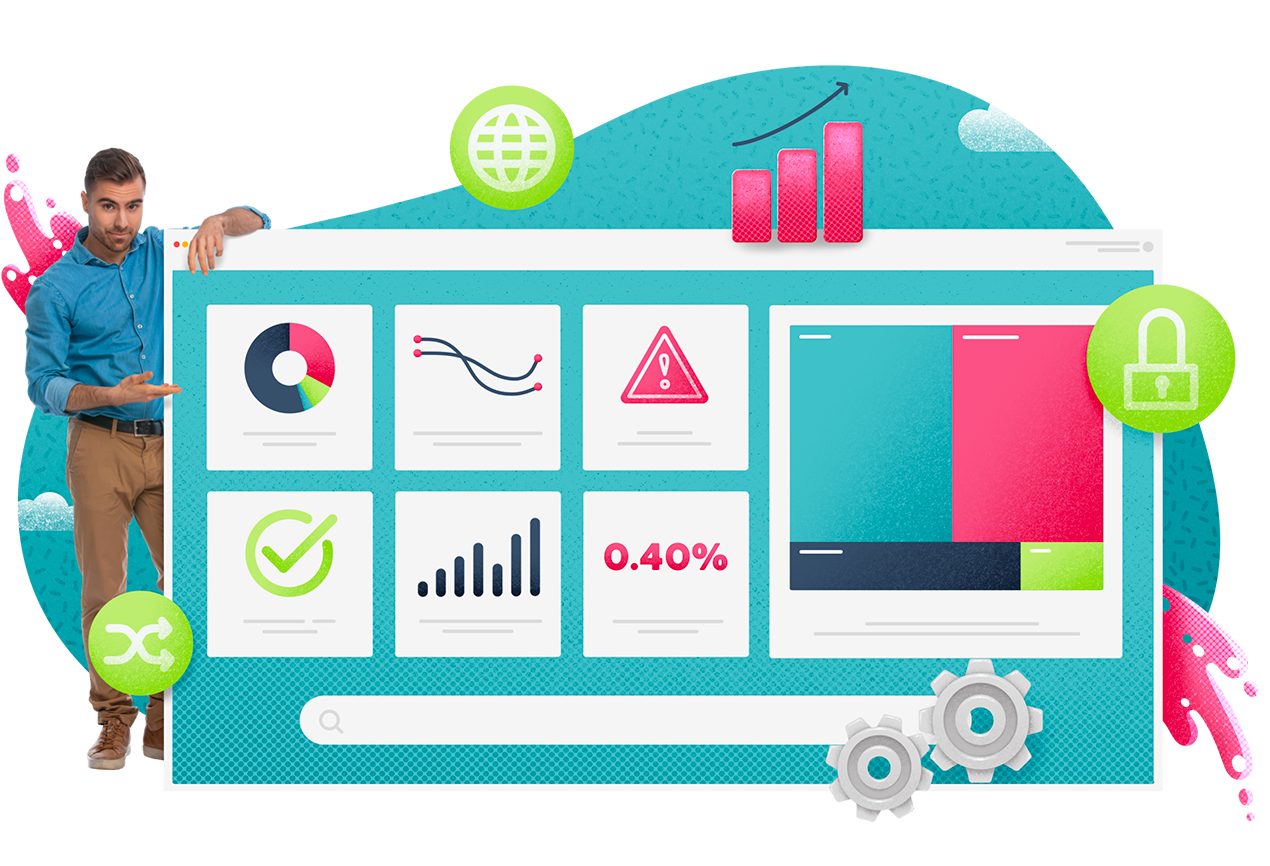
The answer to fragmentation does not lie in purchasing yet another tool, but in rethinking the architecture of existing tools. A modular ITSM platform addresses the problem at its root: the different areas — service management, monitoring, automation, asset discovery, remote support — are designed to operate on the same platform, sharing a single data model and a single interface. This is not about giving up specialized functionality, but about obtaining it by enabling communication between the different components. This unified architecture produces concrete economic and operational benefits.
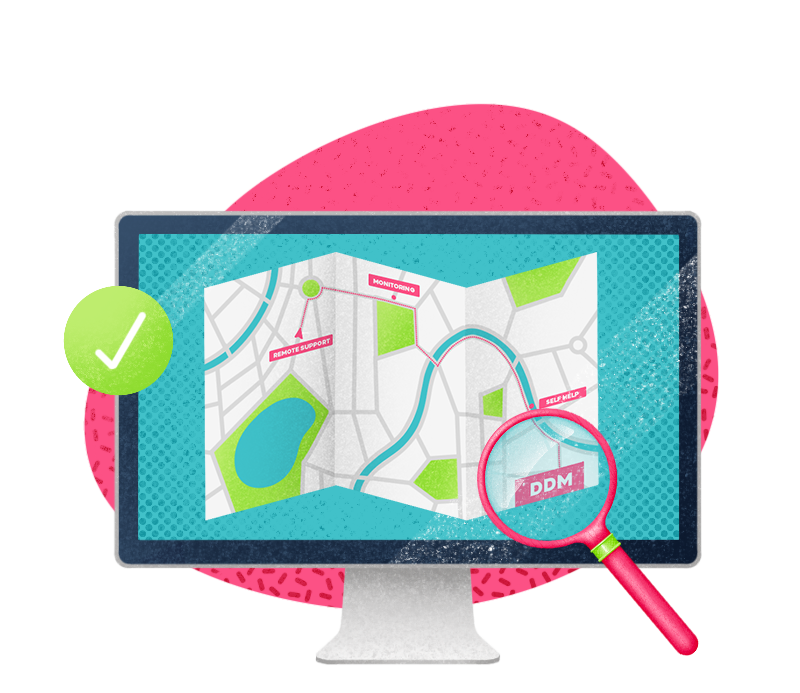
A single vendor means a single contract, a single update cycle, and concentrated negotiating power. A single data model eliminates the need for fragile connectors: information flows between modules natively. And a shared interface reduces training time, allowing support and operations teams to work with a common set of tools and a single source of truth. This, for example, is the approach adopted by the EasyVista platform, which unifies service management, remote support, monitoring, and automation within a single integrated system.
Modularity: Buying Only What You Need
The value of modularity lies in the ability to adopt the platform in stages, without paying upfront for functionality that is not yet needed. An organization can start with service management functions and later add infrastructure monitoring, automation, or asset discovery as needs mature and diversify. This approach reduces the risk typical of full implementations — those that introduce the entire solution in a single phase and often entail long timelines, low adoption rates, and a delayed return on investment.
Flexibility also applies to the licensing model. Distinguishing between heavy users and occasional users aligns spending with actual usage and avoids charging a full license to those who rarely access the system.
The Communicating Features That Make the Difference
The advantage of a unified platform becomes clear when you observe how the modules — the individual functional components of the platform, from service management to monitoring to automation — collaborate in practice.
An event detected by infrastructure monitoring can automatically generate an incident in service managemen that is already equipped with technical context and linked to the affected asset in the CMDB. Through automation, the system can then execute a predefined resolution action — restarting a service, applying a known fix — without human intervention, and log the outcomethere. Discovery keeps the CMDB up to date, which in turn feeds incident and change management with reliable data on all dependencies.
In a landscape of separate tools, each of these steps would require a dedicated integration and manual oversight. On a single platform, the same chain of events unfolds as a natural flow, because the modules share data from the outset.
The Role of AI in a Unified Environment
Artificial Intelligence makes the advantage of collecting all IT data on a single platform even more evident, because the quality of results depends on the quality and completeness of the data the applications can access.
On a platform that brings together incidents, knowledge, assets, and metrics in a single place, AI functions can suggest the categorization and urgency of a ticket, identify similar incidents that have already been resolved, propose relevant knowledge base articles, and automate repetitive tasks such as summarizing comments and annotations or translating requests. In a fragmented environment, on the other hand, AI only has access to a portion of the available information and produces less reliable results, because it processes partial and incomplete data.
Consolidating ITSM Tools: Which Platform?
An IT manager tackling a consolidation project must distinguish a truly unified platform from a collection of products grouped under a single commercial label. This can be done by relying on a few key evaluation parameters.
- The first is the authenticity of integration: do the modules truly share the same data model, or do they remain separate products connected by connectors?
- The second is modularity: is it possible to start with one area and expand later, or does adoption require purchasing the entire package from the outset?
- The third is functional coverage: does the platform cover the areas that matter to the organization — service management, monitoring, automation, asset management — with an adequate level of maturity?
It is also worth verifying deployment flexibility (availability in cloud and on-premises), openness to third-party systems via APIs, and the licensing model, which should reflect actual usage rather than imposing uniform costs on categories of users that may be very different from one another. An evaluation conducted on these parameters protects against replacing tool fragmentation with a new kind of fragmentation that’s only superficially resolved under a single interface.
Consolidating Without Sacrificing Depth
The recurring concern when facing a consolidation project is having to trade the functional richness of specialized tools for the convenience of a single solution. The defining quality of a mature modular platform is precisely its ability to offer both: the depth of functionality that individual areas require and the coherence of a unified environment.
In 2026, with cloud and AI spending under scrutiny from management and IT departments under pressure to quickly demonstrate their impact,choosing a platform that unifies interconnected capabilities and is modular by design is both a cost rationalization and an architectural decision. In this sense, it shapes the IT department’s ability to operate coherently, to adopt AI on solid foundations, and to grow without multiplying complexity at every step.
FAQs
Why is consolidating ITSM tools worthwhile in 2026?
Because the multiplication of tools generates growing costs at every renewal, fragile integrations to maintain, and fragmented data that lengthens resolution times. A unified platform reduces all three of these issues simultaneously.
What is a modular ITSM platform?
A platform in which service management, monitoring, automation, discovery, and other areas are designed to operate together, sharing a single data model and a single interface. Modules can be adopted in stages rather than all at once.
Does consolidating mean giving up specialized functionality?
No. A mature modular platform offers modules with the same functional depth as specialized tools for each area. The added value is that these modules share data from the outset, up-to-date information shared across all modules.
How do you distinguish a true platform from a collection of heterogeneous products?
By verifying whether the modules truly share the same data model, whether adoption can be gradual, and whether the functional coverage is adequate in the areas relevant to the organization. Genuine integration does not depend on external connectors.
The ITSM Buyer’s Guide: lessons from The Voice of the customer
Choosing an IT Service Management (ITSM) platform isn’t easy. The market is crowded and the features often sound the same.
Download the guide now to discover the three key lessons!

Gartner® Magic Quadrant 2026 for ITSM Platforms
Get the latest ITSM insights! This report cuts through the noise with independent analysis, vendor positionings, and actionable insights to guide your next ITSM decision.